Silk, velvet, real touch or foam: which artificial flower material?
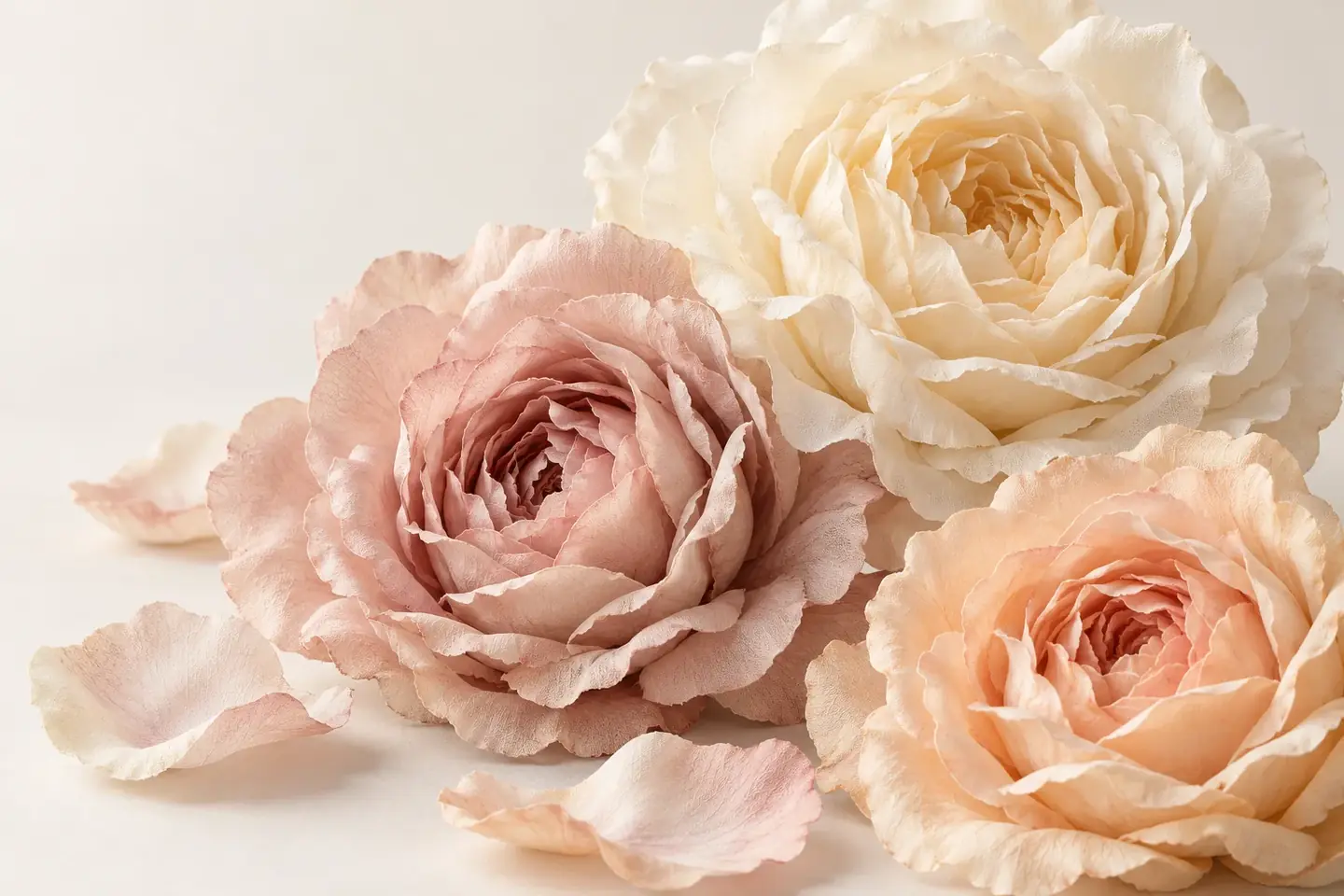
Polyester silk is the standard choice for flower heads and stems: durable, good color and mid-priced. Velvet gives roses a soft matt look in rich colors. Real-touch petals feel closest to fresh flowers and cost the most. Foam is light and cheap, best for large walls seen from a distance.
Quick comparison
| Material | Look and feel | Durability | Relative cost | Best for |
|---|---|---|---|---|
| Silk (polyester) | Fine fabric, slight sheen, crisp petal edges | High; can be dusted and reshaped | ●●○ | Most heads and stems, walls, arches, bouquets |
| Velvet (flocked) | Soft, matt, rich in dark colors | Good; holds lint and dust more | ●●○ | Roses, gift boxes, winter and luxury looks |
| Real touch | Coated petals that feel cool and smooth, like fresh flowers | Good indoors; marks more easily, keep out of strong sun | ●●● | Bridal bouquets and close-up work |
| Foam (PE) | Light, matt, simpler detail | Fair; dents if crushed | ●○○ | Large walls and ceilings seen from a distance, crafts |
Choosing by use
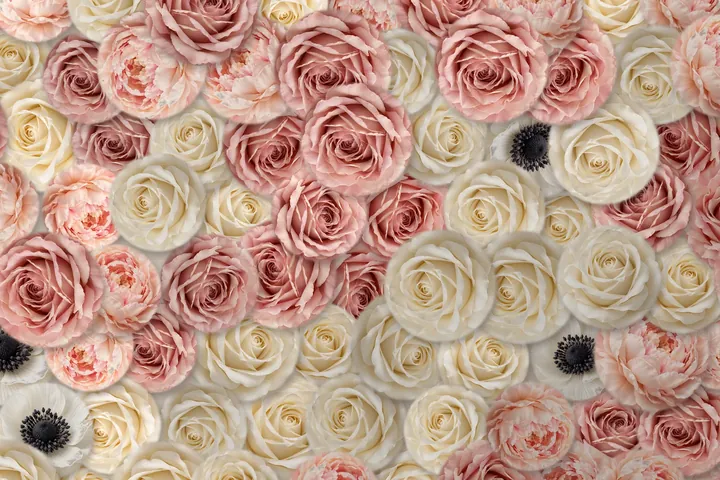
- Flower walls: silk for walls that guests walk up to and photograph; foam for very large or high walls, or to bring cost down.
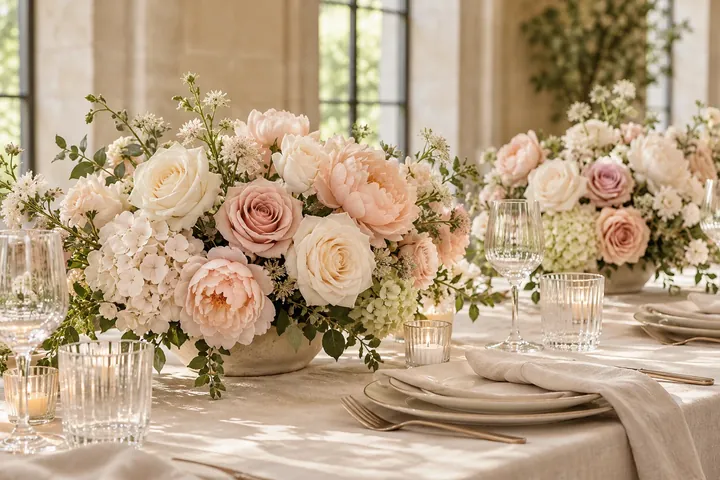
- Bridal bouquets: real touch for the bride's bouquet, silk for bridesmaids and table flowers.
- Gift boxes: velvet roses for a soft, premium look; silk for bright colors.
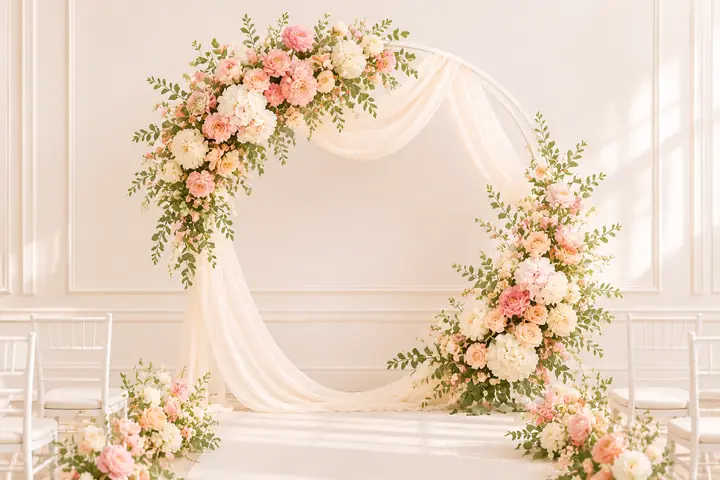
- Rental décor: silk, because it survives repeated packing and reshaping best.
Care and storage
- Dust with a soft brush or a hair dryer on the cool setting.
- Reshape crushed petals with a little steam from a garment steamer, held about 20 cm away.
- Store in closed boxes, away from direct sun. All fabrics fade with long exposure to strong sunlight.
Getting samples
The best way to choose is side by side. Ask for the same flower in two materials; stock-color samples are usually ready to ship in 3–7 days.